
Alibaba: Leading China’s AI-Enabled Ecosystem
1. Competitive Advantage and Industry Positioning
Alibaba is uniquely positioned among Chinese tech giants to compete with global leaders like Google and ByteDance in AI and cloud infrastructure. Its competitive edge stems from:
Leading AI infrastructure and TPU capabilities: Alibaba has invested heavily in self-built data centers and custom chips, giving it control over costs and performance. Its cloud and AI infrastructure enables rapid model training and deployment, making it one of the few firms capable of building hyperscale AI solutions comparable to Google.
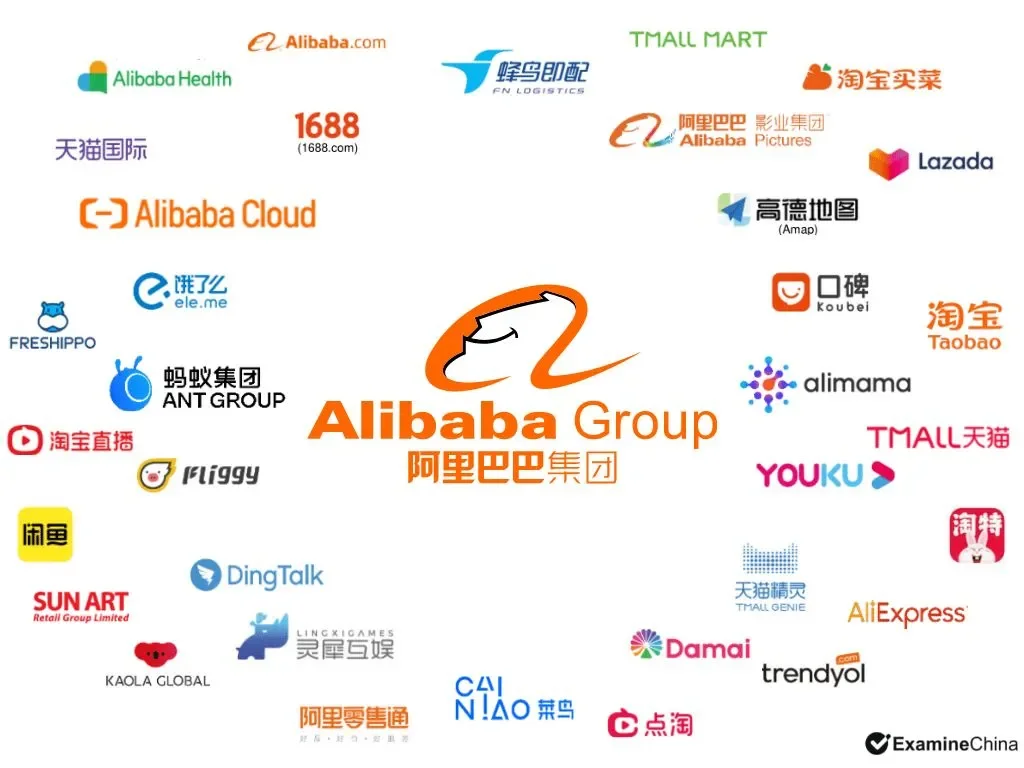
Ecosystem depth and vertical integration: Alibaba’s AI capabilities are deeply embedded in its broader ecosystem. By integrating AI into e-commerce, logistics, cloud, and advertising, Alibaba reduces dependency on external vendors while strengthening its own platforms. Non AI business provides the cashflow necessary to support Alibaba’s 380bn RMB capex commitment in three years. Start ups like Deepseek or OpenAI rely on external funding that struggles to reach this scale, bringing uncertain to their capital deployment strategy.
Open-source Razor & Blade Model: Alibaba’s open-source AI models foster broader adoption and faster ecosystem development. Open-source models enable vertical customization for industries without pre-existing datasets while providing cost-effective and practical solutions. The open-source strategy also accelerates commercial adoption in regions like Asia-Pacific and the Middle East. Recently Singapore national AI program replaced Gemini with Qwen as its official LLM. The Qwen models are rapidly advancing to break-even or advanced status compared to closed source leaders like Gemini and OpenAI.
According to recent MS China CIO surveys, Alibaba stands out as a hyperscaler that offers full stack solutions from Model to Cloud compute to deployment, contrasting with competitors that primarily license models. Its full-stack ecosystem gives it a distinct advantage and is projected to be the largest share taker in future AI related spending.

2. Alibaba Cloud: China’s Best AI Enabler
Alibaba Cloud is the fastest-growing incremental share gatherer, posting 37% yoy growth across 11 stack services. Key strengths include:
Self-built data centers: Low and controllable operating costs, combined with automated operations, allow scalable AI deployment.
Full product suite and ecosystem maintenance: Proprietary model downloads and cloud services reinforce Alibaba’s ecosystem.
Commercialization pathway: Alibaba’s ToB (business-to-business) services have a clear monetization path, from infrastructure to AI-enhanced applications.
Compared to international peers:
Azure: Leverages OpenAI models but internal AI capabilities is weak and under-committed.
AWS: Infrastructure provider that lacks core LLM and customized TPU.
Google: Global leader but less localized for the Asia-Pacific and Middle East markets.
Alibaba’s AI + cloud strategy ensures its ecosystem remains sticky and positions it as a leading AI enabler globally. It is a key component for its razor and blade model that allowed its models to be open-source in the first place. As AI deployment accelerates globally, this will accelerate cloud revenue growth and make it more profitable than existing cloud business.
3. Food Delivery and Traditional Businesses
I believe Alibaba’s escalation of the food-delivery war against JD and Meituan has been a strategic misstep, and the company should meaningfully scale back this effort over the next two years. Food delivery is structurally one of the most competitive categories in Chinese internet—effectively a quasi–public utility that requires massive density, geographic scale, and operating leverage to generate profits. It is a winner-take-all business where incremental capital rarely shifts long-term market structure.
Given this, Alibaba cannot afford to fight a two-front war. Capital deployed into subsidizing meals and beverages generates minimal strategic return compared to investment in AI infrastructure, where Alibaba has clear structural advantages and far higher long-term ROI.
I understand the defensive rationale: Meituan’s to-store business is high-frequency and could gradually reshape user behavior. If consumers anchor their daily journeys (food, services, local life) in Meituan, the platform risks expanding into product commerce and weakening the traditional e-commerce model. This substitution risk is real and explains why Alibaba chose to respond aggressively.
However, I expect the market to reach a more rational equilibrium. In any high-frequency traffic battle, symmetry tends to emerge because neither platform can sustain perpetual cash burn. The likely steady-state scenarios are:
Meituan tempers its push into to-store penetration inside Alibaba’s core categories, and Alibaba correspondingly reduces the intensity of its discounting; or
Meituan concedes a degree of share in food delivery, allowing Alibaba to maintain reasonable user visitation and frequency, so both ecosystems can coexist without existential threat.
Despite Meituan’s operational excellence, the reality is that Meituan is still only one-fifth Alibaba’s size. Alibaba’s balance sheet—cash and short-term investments alone—could effectively purchase Meituan outright. Meituan therefore cannot sustain an open-ended price war against a much larger capital base without risking prolonged unprofitability. Ultimately, the rational path is coexistence and recalibration, not escalation.
4. Sum-of-the-Parts Valuation
Based on business segment assumptions:
Cloud 6x PS (with upgrade potential long term) = 800bn
E-commerce et al 15x PE = 2 trn
Not counting cash and investments like stake in Ant Finance and others: 500bn+
Current 3 trn valuation reflects market skepticism over food delivery profitability and underestimates the long term potential of AI adoption. I think Alibaba is the primary AI enabler in China and will be a key competitor globally in the AI race. Investors have underestimated China AI story and Alibaba should be a core holding to anyone interesting in AI or investing in China.
6. Investment Thesis
Alibaba is an attractive long-term investment because:
AI leadership and ecosystem control: Alibaba uniquely combines cloud infrastructure, open-source models, and a deep commercial ecosystem, positioning it as the leading AI enabler in China.
Monetization optionality: Its commercialization loops in cloud, e-commerce, advertising, and AI are already proven. Food delivery, while loss-making today, is expected to reach profitability and reinforce ecosystem stickiness.
Global scalability: Open-source AI and cost advantages allow Alibaba to penetrate international markets, providing a third growth engine.
Undervalued relative to fundamentals: SOTP valuation suggests substantial upside, with market underestimating AI adoption and overseas expansion potential.
Risks
Macroeconomic slowdown could impact cloud adoption and consumption.
Intensifying competition in AI and e-commerce may pressure margins.
Geopolitical and regulatory uncertainties, particularly affecting overseas expansion.
Food delivery profitability may take longer than expected to materialize.
Conclusion: Alibaba is not just an e-commerce giant; it is China’s leading AI enabler with a strong ecosystem, high entry barriers, and multiple growth levers. Current market skepticism presents an attractive entry point for long-term investors who can look past near-term losses in food delivery and focus on the structural growth opportunities in AI, cloud, and international markets.
