
I. The OASIS Hypothesis: Why Gaming Is Next
The previous piece dealt with AI for Science, and the conclusion was "still early," constrained on three fronts: training data is inaccessible (you can't get the medical records), the black box is uninterpretable (you can't explain yourself to the regulator), and hallucination tolerance is zero (get it wrong once and someone dies). This piece changes industries. Gaming is the most data-rich setting there is — every rendered frame, every keypress is training corpus. It is the setting where the black box matters least; players have never asked for interpretability. And it has the highest hallucination tolerance of any industry on earth: a certain amount of emergence, surprise, and going off-script is itself part of the gameplay. Same technical constraints, different industry, potentially the opposite verdict.
But before discussing supply, answer a bigger demand-side question first: if AI really does absorb a large share of repetitive labor over the next decade, what gets released? Time. Attention is a conserved quantity — once working hours are compressed, the surplus hours have to flow somewhere, and at every productivity jump in human history, entertainment has been one of the largest absorbers. In Economic Possibilities for Our Grandchildren (1930), Keynes predicted that a century later humanity would need to work only fifteen hours a week. The productivity half of that has broadly been delivered; the time-allocation half has not. AI puts this nearly century-old suspended question back on the table — and this time, the infrastructure to absorb the leisure already exists.
Ready Player One provides the limit case for this thought experiment. In 2045, the physical economy has stagnated and people have relocated the center of gravity of their lives into the OASIS — simultaneously a game, a school, a workplace, a social venue, and an economy, whose virtual currency in the book is harder than real-world money. Strip away the dystopian shell and the economic core of the OASIS hypothesis reduces to one sentence: when the marginal cost of virtual experience approaches zero while the opportunity cost of the physical world keeps rising, the time share of life migrates systematically toward the virtual.
And the weak form of this hypothesis is already being validated. On standard methodology, the global games market is on the order of $180–190 billion, roughly three times the sum of global box office and recorded music revenue — gaming has long been humanity's largest entertainment category; it is only capital markets' narrative weighting that lags far behind its time weighting. On the other side, offline live entertainment is being luxury-ified, with ticket-price inflation visible to the naked eye. As a substitute, gaming is the medium with the lowest cost per hour, the highest immersion, and the only one that ships with a built-in social system and identity system. If future entertainment consumption stratifies, the likely shape is that a minority pays a high price for scarce physical presence while the majority's daily hours flow toward low-cost, high-immersion online worlds — which is simply the mild version of the OASIS.
So the positioning sentence of this piece is: gaming is AI's consumer endpoint, not an intermediate link that AI replaces. On the supply side, AI is compressing its production costs; on the demand side, AI is releasing its consumption time. An industry that simultaneously gets a downward shift in its cost curve and a rightward shift in its demand curve is rare in the AI narrative — the last thing that satisfied both was cloud computing.
One intriguing footnote. At this year's keynote, Epic founder Tim Sweeney described a vision in which Fortnite eventually becomes a single enormous world, where each creator's island and game is one location within it and a player's character physically walks from one game into another — even educators in the engine community said outright that this is the opening scene of Ready Player One. What Sweeney also said in the same session was that after years of grappling with the industry's incumbent hegemon, "we don't want to become the next hegemon." Translated: he wants to be Halliday building the OASIS, not IOI selling ad space. The sentimental content of that statement and its valuation implications matter equally, and we do the arithmetic in Section VI.
II. The Status Quo: AAA's Cost Disease
Disclosure first, narrative second.
GTA 6 is the specimen of this era's AAA economics. It ships November 19, 2026; analysts broadly estimate its budget at $1–1.5 billion (with third-party estimates built on Rockstar North's public financial filings running higher still), making it the most expensive game in history. Against 2013's GTA 5, which cost roughly $265 million including marketing, the flagship product's cost has risen four- to fivefold within a single generation. It is priced at $79.99, $99.99 for the ultimate edition, with no disc in the physical box. Full development began in 2020, the project was planned across more than ten years, and it slipped twice (autumn 2025 → May 26, 2026 → November 19). Take-Two has staked nearly the entirety of its $8.0–8.2 billion FY2027 revenue guidance on this one release date. Zelnick reportedly told Bloomberg that selling "only" 10 million units on day one would be a financial disaster — while sell-side expectations sit at 25 million day one.
Zelnick's narrative around this cost structure is that expense is itself the strategy: cost is the barrier to entry. This is the proposition this piece will test head-on — if AI knocks execution costs down an order of magnitude, is a billion-dollar barrier a moat, or stranded capital?
Microsoft's disclosures supply the other half of the picture. Just days ago (July 6), Microsoft announced company-wide layoffs of 4,800 people, about 2.1% of headcount, of which Xbox cut 1,600 that day, with plans to cut roughly 3,200 cumulatively within FY2027 — a fifth of the gaming division's total headcount. New Xbox CEO Asha Sharma called it the "most significant restructuring in Xbox's history" in an internal memo, stating plainly that "our business today is not healthy": divisional margins run 3–10x below comparable platform and publishing businesses, and per the memo content cited by GeekWire, studios lose 64 cents for every dollar invested, with divisional margins of only about 3%. Four studios — Ninja Theory, Undead Labs, Compulsion, Double Fine — were spun out to operate independently. And this comes on top of two rounds of layoffs totaling more than 15,000 people in 2025 (including 9,000 in July). A company that spent $68.7 billion acquiring Activision Blizzard in 2023 has, three years later, earned this verdict from a sell-side analyst: DA Davidson's Gil Luria said the gaming business is now "almost irrelevant" to Microsoft.
At the industry level a paradox emerges: total revenue is at an all-time high, yet most companies are struggling. Tentpole economics is hardening — risk and return concentrate into a tiny number of super-titles while the middle band of products is systematically squeezed out. GTA 6 can charge $79.99 and drop the disc precisely because it has no substitute; everything substitutable — the annual franchise releases — struggles even to hold $70. Pricing power comes from irreplaceability, and irreplaceability comes from the cost barrier. This is the internally consistent part of Zelnick's narrative, and also its most fragile part: the entire loop rests on the single assumption that high cost cannot be routed around by technology.
One last crossover, for readers of Bottleneck Migration: Xbox hardware was forced into a price increase this year, one direct cause being the surge in memory chip prices — AI data centers took memory away from gamers. The demand side hasn't yet waited for AI to remake gaming; the cost side has already been remade by it. This is not rhetoric. It is the two ends of the same capex cycle squeezing each other.
III. UE6 in Detail: Five Layers of Putting AI Into the Engine

On June 17, at State of Unreal during Unreal Fest in Chicago, Epic formally announced that Unreal Engine 6 (UE6) is in development: targeting Early Access at the end of 2027, with the full release expected another 12–18 months later — the first UE6 games will land in 2028–2029. Against UE5's cadence (announced May 2020, EA May 2021, full release April 2022, first games shipping mid-2023), this timeline is credible. The first confirmed game upgrading to UE6 is Rocket League. Sweeney compressed the definition of UE6 into a formula: UE5 plus UEFN equals UE6 — the traditional AAA toolchain and the Fortnite creator toolchain merged into one engine. Worth noting is another line from the same session: every prior generation of Unreal put graphics first, but this generation rebuilds the engine's foundations as the priority. Unpacked, that foundation has five layers.
Layer one — language: Verse and Scene Graph. Verse is a multi-paradigm programming language (functional, logic, and imperative coexisting) designed by Sweeney together with Haskell co-creator Simon Peyton Jones, and its three official design principles are "everything is code, only one language, metaverse-first." It specifically eliminates C++'s three pain points on large projects: no manual memory management, no null pointer exceptions, no header files; networking code is written once and takes effect on client and server simultaneously. More importantly, it is not a paper design — since March 2023, Verse has been genuinely driving the gameplay logic of tens of thousands of Fortnite Creative maps inside UEFN, completing its stress test on three years of live-service traffic. In UE6, Verse will replace C++ as the primary gameplay language, visual Blueprints enter a deprecation path, and the accompanying Scene Graph will replace the Actor framework that has been in use for over twenty years; Epic has committed to releasing the Blueprint-to-Verse auto-conversion tool and the full migration toolchain for free. Insert here an author's judgment rather than an official line: a language with no implicit state, transactional semantics, and highly structured syntax is natively friendly to large-model code generation — the ceiling on an LLM's accuracy writing Verse is very likely higher than writing C++. Epic is rebuilding the language layer for the AI era, whether or not it says so publicly.
Layer two — simulation: from single-threaded to "a million players on one server." UE4 and UE5 carry a twenty-year technical debt: game simulation is single-threaded — on a 16-core CPU, only 1 core runs game logic. This is the root cause of the CPU bottleneck in the vast majority of Unreal games, and the invisible ceiling on players per match. UE6's core engineering goal is multithreaded simulation, with the official line being support for 100+ players per match; Sweeney's long-term vision goes further: rebuild the networking model so players migrate seamlessly between servers, so that servers in one data center — or across multiple — cooperate on a single simulation, pointing toward millions concurrent. To connect back to Section I: this is the engineering precondition for the OASIS. Without cross-server cooperative simulation, Fortnite is forever ten thousand parallel hundred-player rooms; with it, a "single enormous world" becomes discussable.
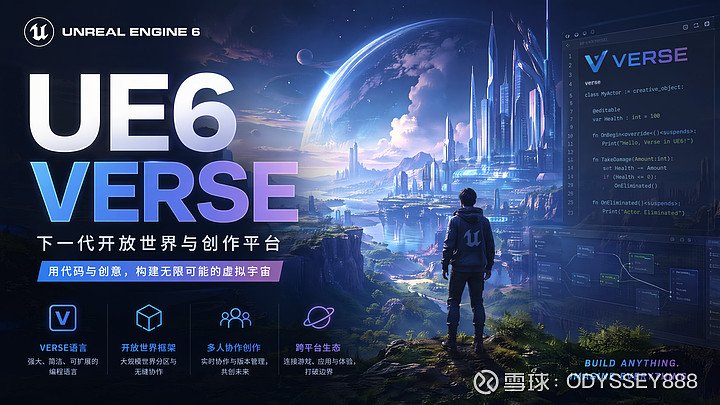
Layer three — distribution: build once, ship everywhere, plus a cross-game economy. UE6's promise is that building once the UE6 way lets you ship simultaneously to console stores, PC stores, and mobile stores, and also directly into the Fortnite ecosystem or any other third-party ecosystem built by developers on UE6. Paired with this is the interconnection of the economic layer: Fortnite's item economy will open to third-party developers — players walk across games carrying their own skins and outfits, and developers plug into a ready-made consumer economy with hundreds of millions of accounts instead of cold-starting from zero. Epic Games Store and Fortnite tie-ins are already running ahead of this: buying partner content in the store grants the corresponding IP's Fortnite outfit, with more than 30 such collaborations planned for 2026–2027. Also at this layer, Epic announced a full embrace of open standards including USD and glTF — a line that looks like an engineering detail but is actually foreshadowing for Section V; set it aside for now.
Layer four — AI: the MCP plugin and diffusion models inside the engine. This layer is not UE6 futures but goods already shipped in UE5.8, released the same day as the UE6 announcement. First, an experimental MCP (Model Context Protocol) plugin: models such as Claude and Gemini can plug directly into Unreal projects, with the official positioning being "a collaborator that understands and can operate within Unreal workflows" — not an assistant you paste code into a chat window for, but an agent that can read the scene and work directly in the editor; the interface is open and the model is your choice. Second, diffusion models in the engine: using the 3D scene's own depth channel, normal maps, and camera data as conditioning inputs, combined with text prompts, to generate stylized imagery that respects shot composition and scene layout, to mesh segmented objects directly into reusable 3D assets, and even to render complete video sequences — this batch of media workflow tools is slated for release in early 2027. Third, the accompanying Lore: a free, open-source version control system that manages source code and large art assets in one system. String the three together: the three great time sinks of game development — writing glue code, making art assets, and managing iteration and collaboration — are each called out by name. In Epic's roadmap, AI is no longer a bolt-on tool but a first-class citizen of the engine pipeline.
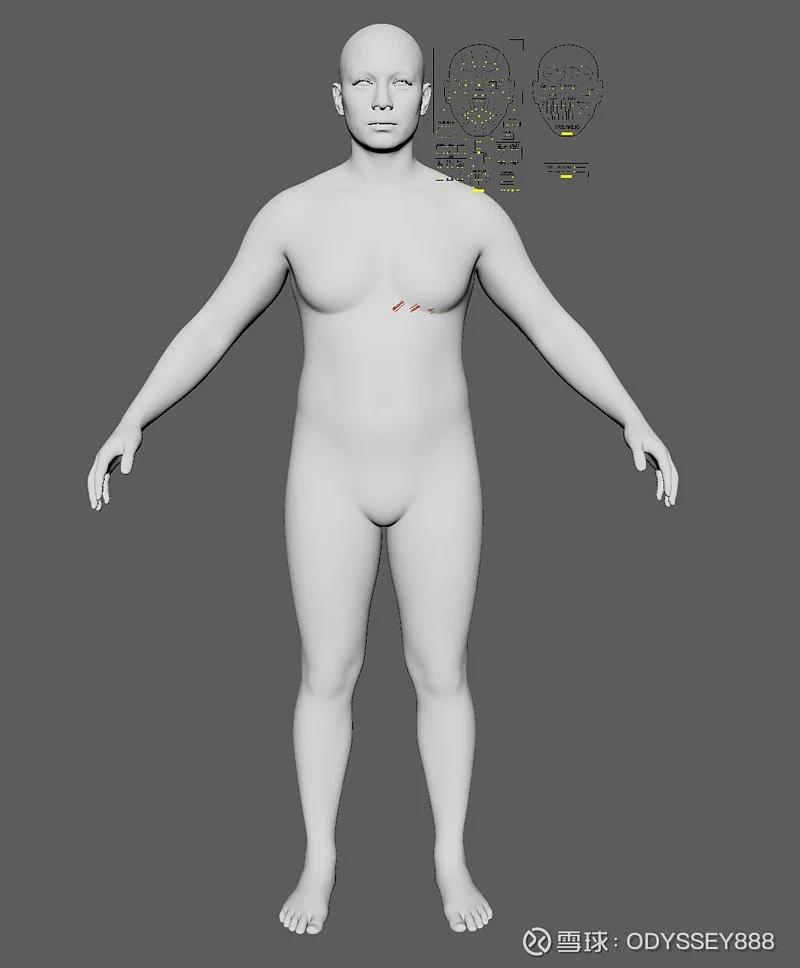
Layer five — content cost: MetaHuman and 5.8's performance dividend. The keyword for this generation of MetaHuman is "de-equipment": MetaHuman Animator's markerless mocap does full-body motion capture with a single ordinary camera — where you previously needed a mocap stage and an actor in a marker suit, you now need one camera. MetaHuman Crowd makes digital crowds usable across the full platform range from phones to high-end consoles. On the rendering side, MegaLights goes production-ready in 5.8 — The Coalition demonstrated in Gears of War: E-Day scaling from single-digit light sources to hundreds or thousands of dynamic shadow-casting lights while holding 60fps on Xbox Series X; Lumen Lite lets Switch 2-class devices run 60fps dynamic global illumination; and shader compilation optimization cut Fortnite's shader count by 68% outright. Taken individually each is an engineering improvement; taken together they are one thing: pushing down the unit cost of "AAA feel" at every link in the chain.
Ecosystem numbers supply cross-sectional evidence for this supply-side logic: cumulative UEFN developer payouts have exceeded $1 billion, creative iteration time is down 40% on average, and playtime on creator content on mobile doubled in a year; a Star Wars-themed island drew nearly 8 million players in its first 72 hours, with a Simpsons IP integration imminent; third-party PC spending on Epic Games Store grew 57% in 2025 to a record $400 million. But the single most important line of the whole keynote for investors is an engineering detail: the live version of Fortnite is currently synced in real time with UE6's main branch, and every seasonal major update migrates more of the existing codebase toward UE6 architecture — Sweeney's phrasing is that today's Fortnite is UE6's "giant laboratory." A live service with hundreds of millions of MAU serving as the staged-rollout test environment for the next-generation engine is an asset Unity does not have, and world-model companies have even less.
In short: my judgment is that stronger foundation models, cheaper tokens, and engine-level AI integration converge into a tipping point around 2028.
IV. Falsification: Two Counterarguments
Counterargument one — Zelnick: asset generation is not hit creation. The Take-Two CEO's argument deserves recording at its original strength: AI is very good at generating assets, but assets are a necessary and not sufficient condition for a hit; datasets are inherently backward-looking, so what AI produces is derivative, and "clones don't sell." Furthermore, if AI really did make hits faster and better, the largest beneficiaries would be precisely those already in the game and already owning IP. On world models, his word choice was "laughable," and he said he was astonished by the market's panic reaction. The argument itself does not contradict "AI compresses execution cost" — it is about where the surplus flows, not about technical capability. Record the crack in one sentence: during the same period these remarks were made, Take-Two cut its entire AI department (including AI head Luke Dicken and his team), and its FY2026 annual report listed AI as a risk factor. When narrative and disclosure fight, believe the disclosure.
But I do not think one should discount the pace of technical progress. IP owners certainly have value, but the moat traditional games built out of piled-up code has already been eroded by AI; we will see more small companies making high-quality games and challenging the majors.
Counterargument two — the Roblox problem: falsifying the "explosion of high-quality content." The last time creation-tool costs collapsed (Roblox, UEFN), the result was that the floor of content dropped substantially while the ceiling did not rise: an explosion in quantity, not in quality. To argue "this time is different" requires a mechanism, and the honest mechanism is this: what AI compresses is execution cost — writing code, making assets, fixing bugs, iterating patches; but taste, sense of direction, and coherence of systems design — the core variables in the hit function — have not become abundant. So content oversupply will not democratize hits; it will push value to the two ends — to those who own distribution (when supply is infinite, discovery is the bottleneck) and those who own IP (when marketing stops working, incumbent attention is the only defensible customer acquisition). Note the side effect of this falsification: it partly rescues Zelnick (the IP argument holds), simultaneously strengthens the platform argument, and kills most of the reasons to invest in the content-production link.
V. The Second Job: Game Engines as Driving Schools for Robots
A game engine's first job is entertainment. Its second job is to give machines a world in which they are allowed to fail.
This is not a new story; it is reinforcement learning's family history. Modern deep RL grew up inside games: DeepMind's DQN made the cover of Nature on Atari games in 2015, followed by AlphaStar playing StarCraft II and OpenAI Five playing Dota 2, and in OpenAI's hide-and-seek experiments agents spontaneously learned to use tools. The reason was never that researchers like games, but that games happen to be the perfect training environment: cheap, infinitely resettable, precisely measurable in progress, and costless to fail in. Robotics research pushed this logic to its necessary conclusion: real-world data is expensive, slow, and dangerous — one fall by a physical robot is tens of thousands of dollars, one extreme road condition can be a human life; whereas in simulation, ten thousand virtual robots can take a million falls in parallel, each one perfectly labeled. The industry developed a whole methodology including domain randomization to cross the sim2real gap, and the core idea is astonishingly plain: make the simulated world diverse enough and messy enough, and reality becomes a subset of the simulation.
In 2026, this logic completed its shift from paper to industry, and the evidence for the shift is too dense to look like coincidence. At CES in January, Jensen Huang declared that "the ChatGPT moment for robotics has arrived"; at GTC in March, his formulation was upgraded to "physical AI has arrived — every industrial company will become a robotics company," with 110 developers of robot "brains" now in NVIDIA's ecosystem. Product-side progress deserves itemizing: on June 1, NVIDIA released Cosmos 3 at GTC Taipei — officially described as the first open-world foundation model unifying visual reasoning, world generation, and action prediction in a single system, natively understanding and generating text, images, video, environmental audio, and action, compressing physical-AI training and evaluation cycles "from months to days"; the accompanying Cosmos alliance was founded with members including Black Forest Labs, Runway, and Skild AI. In the same period, Isaac Lab 3.0, built on the all-new Newton physics engine, entered early access; humanoid foundation model GR00T N1.7 opened commercial licensing, with N2 planned by year end; the "physical AI data factory" blueprint launched first with Microsoft Azure and Nebius — for which NVIDIA Omniverse head Rev Lebaredian offered a line worth copying into your notes: "In this new era, compute is data." On the industry side, the four industrial robotics giants — ABB, FANUC, KUKA, Yaskawa — with an installed base above 2 million units, are connecting Omniverse and Isaac into their respective virtual commissioning systems; nearly every humanoid player, including 1X, Figure, Boston Dynamics, and AgiBot, uses Cosmos world models and Isaac simulation for development and validation. Another Lebaredian line can serve as this section's thesis: "Every factory is born first in simulation."
Now pull gaming back to the center of the frame. Robotics-side world models (Cosmos) and gaming-side world models (Genie 3) are essentially two orientations of the same thing: one so machines can understand the world, one so humans can consume it. The two lines have already begun to converge physically — DeepMind puts its own SIMA agent inside Genie-generated worlds to train; Runway appears both on the "game commercialization" list and among the founding members of the Cosmos alliance, meaning the two markets already share suppliers; startup General Intuition (reportedly a seed round above $130 million) trains world models on the enormous volume of player recordings accumulated by the gameplay clip platform Medal, targeting both game agents and rescue drones — in other words, every minute a player spends gaming produces corpus for embodied intelligence. Gavin Baker (Atreides Management, roughly $7 billion AUM) gave the best summary of this confluence: today's LLMs are like students in a library who know the world only through text; world models let agents personally experience physical law inside gamified simulated environments — what happens when you drop your phone, what happens when you kick a ball. Very few players can supply that "personal experience" at scale, and per 13F-based reporting, Atreides' holdings include Unity alongside NVIDIA, Micron, and Astera Labs — what he is buying is not game content but "simulation as infrastructure."
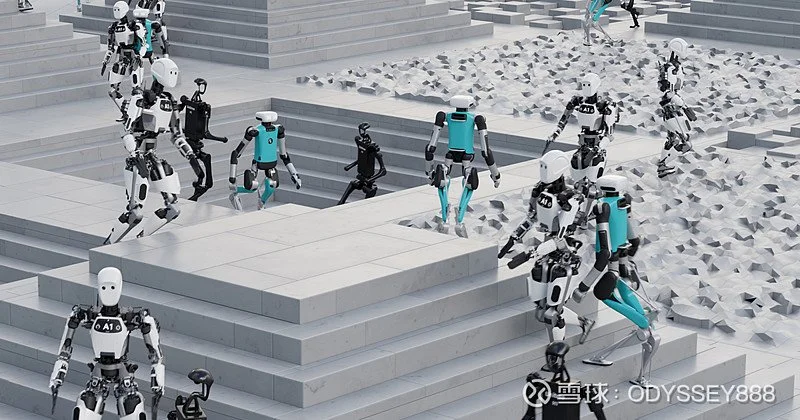
The game engine's position in this value chain hides inside an unremarkable standard: OpenUSD. NVIDIA's Omniverse is built entirely on USD, and converting CAD files to USD is officially described as a critical step in the physical-AI pipeline; and here the foreshadowing set aside in Section III is revealed — Epic just announced at State of Unreal a full embrace of USD and glTF, which means Unreal's content, assets, and toolchain can from now on flow into the industrial simulation world. In fact game engines have long been present: CARLA, the de facto standard simulator in autonomous driving research, is built on Unreal; Unity's ML-Agents and industrial line have been operating for years — which also supplies a second explanation for Atreides holding Unity. On the China side, Tencent's Hunyuan 3D and world-model product lines are the counterpart. The two things engine vendors have spent thirty years polishing — photorealistic real-time rendering and rigid-body physics — happen to be the two most expensive links in a synthetic data pipeline.
How big is the market? The honest answer is that nobody knows, but the manner of not knowing is instructive. Research estimates of humanoid robot TAM differ by two orders of magnitude — Goldman Sachs at roughly $38 billion by 2035, Morgan Stanley at the $5 trillion scale by 2050, Citi as high as $7 trillion — and the divergence in methodology is itself evidence that this is a market that cannot be priced within existing frameworks. But one conclusion holds independent of any single methodology: wherever robotics TAM finally lands, simulation and synthetic data are its pick-and-shovel play. Every robot that walks into reality requires orders of magnitude more simulation hours behind it; TrendForce's post-GTC view is that simulation technology will drive humanoid training costs down rapidly — falling costs amplify shipments, and shipments in turn amplify demand for simulation. This is a self-reinforcing flywheel, and every turn of the flywheel pays a toll to simulation infrastructure.
What this section is really trying to answer is the valuation question. If a game engine's customers are forever only game studios, it is a developer-tools software business, valued on software multiples; but if its customer set expands to "everyone who needs to teach machines about the physical world" — automakers, robotics companies, factories, logistics networks — then the engine's valuation anchor should change to "training infrastructure for physical AI." The first job is valued as software; the second job is valued as land. The third wave written about in Bottleneck Migration (physical AI) is rehearsing its land-price discovery inside game engines.
VI. Thesis and Positioning: When Content Is No Longer Scarce, Who Captures the Surplus
The framework in one sentence: as content moves from scarce to oversupplied, profit in the middle "production" link is compressed, and value migrates upstream (engines and simulation infrastructure) and downstream (distribution, aggregation, and IP). An old framework — in a gold rush, buy the shovels, not the miners; and when the gold itself becomes oversupplied, even the shovels get repriced, and what finally rises in price is the scale that weighs the gold and the road into the claim.
The majors: don't pay a growth premium; only the EA-style purchase makes sense. The SaaS analogy holds here: code was once a software company's largest asset, and now writing code has become cheap; for game studios, a production pipeline polished over a decade was once the moat, and now the pipeline is precisely what AI compresses. Only two assets survive — IP, and the network effects of live service. So the essence of a major's equity = royalty rights on premium IP × an obsolete cost structure. Paying a content growth premium in the secondary market means buying both of those at once; and that narrow door implies that what one should buy is control of the IP (take-privates, leverage, forced restructuring), not the growth narrative embedded in listed shares. This is the complete reason I do not recommend being long large studios in public markets: it is not bearishness on gaming, it is bearishness on "holding a depreciating cost structure at growth-stock valuations."
Engines: the one you want isn't buyable, and the one you can buy has two identities. Epic is private, which is the biggest structural regret of this piece. Unity is the only pure-play listed engine — the 24% single-day drop on January 30 exposed its beta, Bromberg's certainty defense is its alpha, and its second identity is in Section V: ML-Agents and the industrial simulation line make it the only pure listed proxy in the "simulation as infrastructure" narrative, which may be the complete reason Atreides holds it. As for Epic itself, investors must face one fact: its right to charge is capped by its founder's ideology — "we don't want to be the next hegemon," embracing open standards, giving away free tools — which discounts the "engine = taxation" analogy from the outset. But the ecosystem take rate is not capped: once the Fortnite item economy opens to third parties, the real monetization sits in the item economy and store revenue share, and UEFN's $1 billion in cumulative payouts is only the first turn of that flywheel. Engine tax locked down, ecosystem tax starting up — that is the precision one should bring to valuing Epic (and any Epic exposure).
Tencent: the most complete single-ticket expression of this thesis, at the cost of writing three disclosed risks into the position note. Numbers first. Full-year 2025: revenue RMB 751.8 billion, +14%; non-IFRS net profit attributable RMB 259.6 billion, +17%; gross margin 56%, up more than 3 points year over year, driven by a rising share of self-developed games and AI advertising — exactly the operating leverage the "high-margin IP business" argument wants. Q4 overseas game revenue was RMB 21.1 billion, +32%, with annual overseas game revenue exceeding $10 billion for the first time. Q1 2026: revenue RMB 196.5 billion, +9%, slightly below the RMB 199.0 billion expected; domestic games RMB 45.4 billion, +6% — a clear downshift against 24% in the prior-year period, with some Spring Festival timing effect; overseas games +13%; Delta Force reached the "evergreen" threshold (5 million mobile DAU or 2 million PC DAU, with annual gross billings above RMB 4 billion). The thesis itself compresses to one sentence: Tencent sits simultaneously at both ends of this piece's value migration — downstream it has WeChat, the deepest distribution and aggregation layer, at 1.4 billion scale; upstream it holds roughly 40% of Epic (on the 2012 investment basis; the actual proportion may be somewhat lower after dilution across financing rounds) as an option on the engine and the Fortnite ecosystem; in between sits a global content portfolio of wholly-owned Riot, roughly 84% of Supercell, and a basket of minority stakes; plus in-house Hunyuan — Pony Ma said on the Q1 call that the AI business has entered a results-delivery phase, the Hunyuan 3 preview has led token usage on OpenRouter since April 28, and Hunyuan's 3D and world-model product lines give Tencent a seat in Section V's narrative as well.
Given Tencent's position in the gaming ecosystem, I think it should build its AI moat around entertainment and media: can it build the best game engine, and then create the next OASIS that players worldwide play together? Near term I also like gaming's cash flow and its future irreplaceability under AI.
VII. Conclusion: Timeline and Falsification Conditions
The testable dates are already scheduled: end of 2027, UE6 Early Access; 2028–2029, the first UE6 games; before year end, GR00T N2; and running throughout, the slope of the token cost curve and every advance in world models on determinism.
Back to the OASIS hypothesis from Section I. The OASIS will not be built in 2028 — but its foundation (the engine), its land value (distribution and IP), and even its second use (driving school for robots) will be priced seriously by the market for the first time around 2028. On January 30, the market in fact already cast a vote. That was the primary. The general election is in 2028.
Of course, even if we are right, being early still equals being wrong, so one has to keep tracking this industry and wait for the inflection to join. I am relatively constructive on AI landing in the game industry, and I believe NVIDIA is too (it did, after all, come from gaming). TencentHoldings(00700)Tencent Holdings (00700) TencentHoldings(00700) Unity(U)Unity (U) Unity(U)
